
Summary
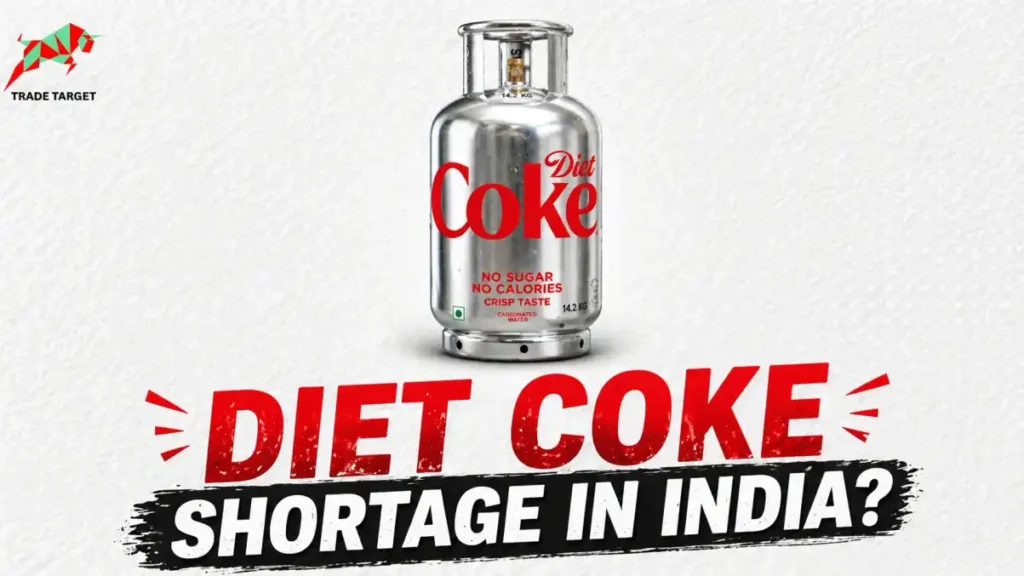
Diet Coke is disappearing in India due to an aluminium can shortage, disrupted Gulf shipments, rising demand, and production delays, leading to limited supply, higher prices, and patchy availability across major cities.
So… you open Blinkit, search for Diet Coke… and nothing shows up.
You think, “Okay, maybe it’s just the app.” You walk into a store, still nothing.
And then you realise… it’s not just you. From Mumbai to Bengaluru, Pune, Ahmedabad, and even Delhi. Diet Coke has just… disappeared.
And when it does come back in stock, it’s gone in minutes, even Blinkit had to limit how much you could order.
Now people online are calling it the “Candemic.” Sounds funny but what’s happening behind this is actually not that simple.
This isn’t just a stock issue, Diet Coke shortage in India has a bigger story behind it.
Let’s break it down.
It’s Not About the Drink. It’s About the Can
In India, Diet Coke comes in cans. You don’t really see it in plastic or glass bottles. So if cans aren’t available… Diet Coke can’t be sold. And right now, that’s exactly the problem of Diet Coke shortage, there aren’t enough cans.
But do you know India had a can shortage before the war started.
Let’s look at it through some numbers:
- In 2025 alone, beer companies were short of around 120–130 million 500ml cans, according to Brewers Association of India.
- At the same time, aluminium prices have gone up sharply. On the London Metal Exchange, prices crossed $3,557 per tonne in early 2026, up $430 since late February, that’s 14–20% jump in under two months. So now, cans are not just limited, they’re also more expensive to make.
- According to industry executives quoted by Economic Times, major can makers like Ball Beverage Packaging and Canpack India are currently unable to keep up with demand. They’re already operating at full capacity, and adding new production lines isn’t immediate, it could take around 10 to 12 months before they become operational.
Wait, So Why Is There a Can Shortage?
Three things hit at the same time right in peak summer, when cold drink demand is highest.
1. Iran’s War Disrupted Aluminium Supply
About 9% of global aluminium production comes from the Gulf region. When Iran blockaded the Strait of Hormuz, shipments to India got hit hard. Coca-Cola distributors confirmed to Reuters that the company was either rationing supplies or not fulfilling orders, with one distributor saying: “We’ve been placing orders but have been told there is a shortage due to war.”
2. India’s Own BIS Certification Order Slowed Things Down
In April 2025, the government made BIS certification compulsory for aluminium cans to improve quality. Good step… but it slowed things down. Approvals for both local production and imports started taking longer.
At the same time, demand was going up. So supply just couldn’t keep up. For now, deadlines have been extended, for big companies till October 2026, smaller ones till January 2027. But that doesn’t fix the real issue.Deadlines extend ho sakti hain… cans magically increase nahi hote.
3. Demand Exploded Faster Than Anyone Expected
Diet Coke was selling better than ever right before it ran out. Zero and low-sugar drinks went from 5% of Coca-Cola India’s total volumes in 2020 to 30% in 2025. Diet Coke alone doubled its sales year-on-year.
Rivals are also seeing the same trends.
PepsiCo’s bottling partner saw no-sugar and mid-sugar drinks hit 59% of volumes in Q4 2025, up from 53% a year earlier. These numbers clearly show India is rapidly moving away from sugar, and the packaging infrastructure simply wasn’t ready for it.
How Much Are Prices Going Up?
Consumers across cities are already feeling it (as per Outlook Business):
- A 180ml can that used to cost ₹25 is now selling for ₹30 in parts of Delhi
- A 300ml can (usually ₹40) has disappeared from many stores
- Bulk buyers in Mumbai are paying ₹10 extra per can on 24-can packs
- Some discount pricing on apps (₹32–33 per 300ml) has dried up, with cans now strictly at MRP or above
What Happens Next?
To manage the shortage, companies are now importing aluminium cans from UAE, Sri Lanka, and Southeast Asia. Together, these regions supply about one-third of India’s can demand.
But these imports cost 25–30% more than usual. So prices are likely to stay high in the near term.
And it’s not just Diet Coke.
Costs of plastic (used for PET bottles) and glass bottles have also gone up. This is affecting bottled water and beer companies.
Beer makers are already asking state governments for a 12–15% price increase.
Even other industries are feeling the impact. India’s condom industry, worth around $860 million, has also been affected due to disruptions in aluminium & petrochemical derivative supplies.
Will It Get Better?
Slowly—yes.
You might start seeing Diet Coke come back in some cities, but not consistently. The main issues are global tensions, BIS approval delays, and limited can production, are still not fully solved.
If the US-Iran situation improves and shipping becomes smoother, supply could improve faster. But on the ground, things take time.
Can makers like Ball Beverage Packaging and Canpack India will need around 10–12 months to add new production lines.
So realistically, you may see some improvement in the second half of 2026. But a full, stable supply across India will likely take until 2027.
Final Words- The Bigger Picture
This isn’t just a Diet Coke problem. It’s a signal that India’s zero-sugar beverage market is growing so fast that the supply chain is struggling to keep up. The segment is projected to hit $4.7 billion by 2030.
Coca-Cola launched options like Coke Zero, Thums Up X Force (no sugar), and Sprite Zero at just ₹10, making diet drinks affordable for the first time.
And people started buying them.
So the product is there.
Demand is clearly there.
The only problem is, there just aren’t enough cans to fill.
FAQs on Diet Coke Shortage in India
Why is Diet Coke suddenly missing from shelves in India?
Diet Coke shortage in India is mainly due to a shortage of aluminium cans. It’s sold only in cans, and delays in Gulf shipments plus high summer demand worsened the situation.
Is the shortage only because of the Iran war?
No. The war disrupted aluminium supply, but local issues like BIS rules, rising costs, and already tight production also played a role. Demand for zero-sugar drinks has increased sharply.
Will Diet Coke prices go up because of this shortage?
Prices have already increased in some places. Coca-Cola may raise prices slightly, as limited supply and high demand are pushing costs up.
When will Diet Coke shortage end in India?
It may take time. New can production needs 10–12 months, and supply issues are ongoing. Availability could improve by late 2026, but full recovery may extend into 2027.
Which Indian stocks benefit from the aluminium can shortage?
Aluminium companies like NALCO, Hindalco Industries, and Vedanta may benefit from higher prices and strong demand.
Why is Diet Coke sold only in cans in India?
Diet Coke in India is sold in cans to maintain a premium image and convenience. But without plastic or glass options, it becomes fully dependent on can availability.
Happy investing and thank you for reading!
Disclaimer:
This website content is only for educational purposes, not investment advice. Before making any investment, it’s important to do your own research and be fully informed. Investing in the stock market includes risks, and you should carefully read the Risk Disclosure documents before proceeding. Please remember that past performance doesn’t guarantee future results, and due to market fluctuations, your investment goals may not always be achieved.
Share via:
- By Hemant Bisht
- 3


